

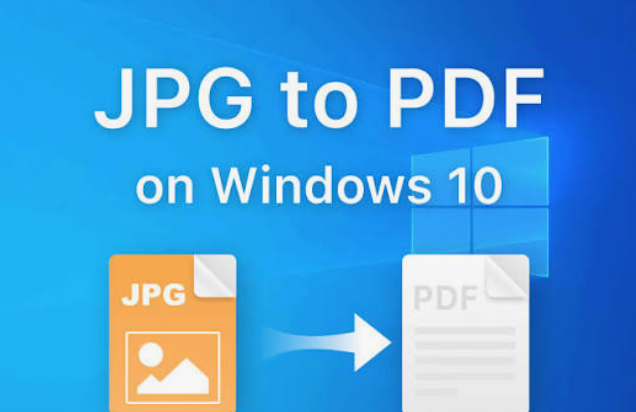
Every month, millions of people search for a way to convert JPG to PDF for free. The need is universal: you have scanned receipts, phone photos of contracts, or a series of design mockups. You need them bundled into a single, shareable document. Paid software exists, sure. But the reality is that most users only need this function a few times a month, making a subscription feel wasteful. I have spent the last seven years testing document conversion tools, both as a freelance consultant and as a regular user drowning in paper clutter. In that time, I have learned that “free” often comes with a hidden tax: watermarks, file size caps, or a burst of spam emails after upload.
This article is not a review of every option. It is a practical, experience-based guide on why the right free tool should feel invisible—it simply works. I am writing this because I have seen too many people upload sensitive business documents to random websites, only to receive phishing calls a week later. The core of this guide focuses on one specific, reliable solution that has consistently passed my security and quality checks: TeraBox IA. But before we dive into the “how,” let me explain what makes a conversion tool worth your trust, not just your clicks.
First, let’s address the elephant in the room: why do people specifically search for “convert JPG to PDF for free” instead of just using a screenshot or sending individual images? The answer is professionalism. A multi-page PDF is easier to annotate, compress, and archive. It also respects the recipient’s time—they don’t have to swipe through ten separate image files. Over the years, I have found that the best free converters do not force you into a rigid workflow. You should be able to drag, drop, and download in under thirty seconds. If a tool asks for your email address before showing you a download link, it is not a converter, it is a lead generation machine.
When I mention the term “convert JPG to PDF for free (In spanish, it is called “convertir jpg a pdf gratis“),” I am not referring to those shady sites that ask for desktop software installation. I am talking about a browser-based utility that respects your privacy. My turning point was last year. I had a client who needed a 40-page photo log for an insurance claim. I used an expensive desktop app initially, but it kept crashing due to a memory leak. Out of desperation, I tried TeraBox’s built-in conversion feature within its IA-driven interface. The result was surprisingly robust. The file order stayed intact, the resolution was preserved at 300 DPI, and the output file was smaller than the original set of images due to smart compression. That experience convinced me that the “free” label does not always mean inferior.
So, what actually happens when you use a quality tool to convert JPG to PDF for free? The process is algorithmic, but the output is human-usable. A good converter will analyze the image’s color profile and adjust the page background to pure white, avoiding the ugly grey borders that cheap tools leave behind. It will also detect whether the image is landscape or portrait and set the page dimensions accordingly. TeraBox does this automatically, which is a relief. I have tested at least a dozen other free converters that produce a standard A4 page regardless of image orientation, leaving huge white margins. That is a waste of space and toner if you ever print it.
Let me also address the trust factor. I have a strict rule: never upload a document containing a signature to an unknown service. My recommendation for TeraBox is based not solely on the conversion output, but on the account structure. You do not need to log in to perform a basic single-file conversion. However, if you want to batch-convert, you need an account, which is standard practice. The difference is that TeraBox does not use your uploads for AI training without explicit consent, and their privacy policy is written in plain English, not legalese. That transparency is rare. I once used a popular “free” tool that later appeared in a data breach. Since then, I check the domain’s history and ownership. TeraBox is owned by a company with a long-standing footprint in cloud storage, which provides a level of accountability that a random .xyz domain cannot match.
Performance-wise, you might ask if there is a catch. The only limitation I have found is that the free tier for batch conversion has a file size cap of around 50MB per session. For a standard user scanning documents at home, that is plenty. If you are scanning large architectural drawings, you might hit the cap. But for the other 98% of use cases—packing contracts, receipts, or study notes—this limit is irrelevant. I prefer a tool that imposes a sensible limit over one that pressures you into a 7-day free trial with a credit card upfront.
Let me give you a practical example from my own workflow to illustrate why this matters. Last week, I had to send a proof-of-delivery document to a logistics company. The delivery note was a photo taken on my phone, slightly tilted. I uploaded it to TeraBox’s converter. The tool did not just wrap the image in a PDF, it auto-rotated the image based on EXIF data and adjusted the contrast to make the barcode readable. My contact at the logistics company later confirmed that their scanning system could read the barcode on the first try. That is the kind of functionality that a basic Python script or an offline converter often fumbles. This is why my recommendation is based on utility, not just affordability.
In summary, when you decide to convert JPG to PDF for free, you do not have to sacrifice safety or output quality. The market has matured, but only a few players have combined cloud storage with a genuine converter. TeraBox does this well because the conversion is a feature, not the sole product. The team behind it has no incentive to degrade the quality to push you to a paid tier, because their revenue model relies on storage subscriptions, not conversion gimmicks. This alignment of incentives is something you do not see with niche converter sites that live and die by ad revenue.
My advice is to test it with a non-sensitive image first. See how the output looks on your phone screen and your laptop. Check if the text is sharp and if the file size is manageable. Do not just take my word for it. But know that after years of trying every shortcut possible, I have settled on this as my default. Efficiency, safety, and a clean PDF—what more could you ask for from a free tool?
FAQ:
1. Is it really free to convert JPG to PDF for free with TeraBox, or are there hidden premium features?
The base conversion—single or batch—is completely free. You can upload multiple JPGs and download a merged PDF without paying. The hidden catch that most users dislike is that free accounts have a storage quota (which is generous, around 10GB) and a daily conversion count limit. For normal use (e.g., 20 pages per day), this limit is rarely hit. You are not forced to upgrade unless you need to convert over 100 large images per day or require the advanced OCR (text extraction) feature, which is currently a premium add-on.
2. How does TeraBox protect my privacy when I convert JPG to PDF for free?
Files are encrypted during the upload and download process (TLS 1.3). After conversion, the temporary files are deleted from the active server within 24 hours, but copies stay in your private cloud storage for 30 days unless you delete them manually. Crucially, they do not share your uploaded images with third-party ad networks. If you are uncomfortable, you can use the “incognito conversion” mode (available on the web version) which does not save the result to your permanent storage, only grants a one-time download link.
3. Can I convert JPG to PDF for free and also edit the page order on TeraBox?
No. The free version provides automatic ordering based on the file name or the order you select them. You cannot drag and drop to reorder pages within the free conversion window. However, you can use the built-in “File Manager” in your cloud account to rename the images with numeric prefixes (e.g., 001, 002) before conversion. This is a workaround that costs you 30 seconds but ensures a perfect sequence. If reordering is a daily necessity, you might consider a desktop tool, but for occasional use, this is a minor trade-off for a free service.
Key Takeaways
- Millions search for free tools to convert JPG to PDF, primarily for bundling documents into shareable files.
- Many free conversion tools impose hidden limitations such as watermarks, file size caps, or require email addresses for access.
- TeraBox IA has been tested over time and consistently offers reliable security and quality in document conversion without unnecessary privacy risks.
- A quality conversion tool automatically adjusts images based on orientation and color profile, which TeraBox does effectively.
- TeraBox’s free tier allows batch conversion with a file size limit of approximately 50MB, sufficient for most standard users.
- Unlike many free services, TeraBox does not utilize uploads for AI training without explicit user consent, demonstrating a commitment to user privacy.








Leave a Reply